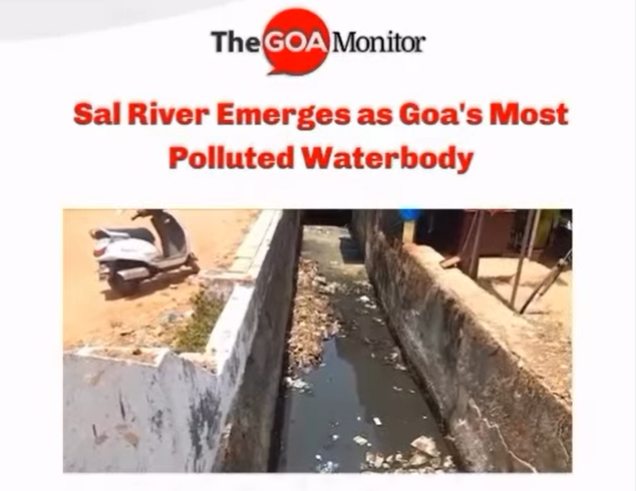
Panaji, Goa: Goa’s environmental challenges have come into sharp focus after the Sal River emerged as the most polluted river in the state, with the Mapusa River also drawing concern over rising pollution levels. The findings have sparked alarm among residents, environmentalists, and community groups who are calling for urgent measures to protect the state’s vital water resources.
Experts warn that continued pollution can have serious consequences for aquatic ecosystems, public health, and communities that depend on these rivers for their livelihoods. Issues such as untreated sewage, waste disposal, and encroachment are often cited as key contributors to the deteriorating condition of Goa’s waterways.
Environmental advocates are urging authorities to strengthen pollution control measures, improve wastewater treatment infrastructure, and ensure stricter enforcement against activities that harm river ecosystems. They also stress the importance of community participation in conservation efforts to achieve long-term results.
As concerns over environmental sustainability continue to grow, the condition of the Sal and Mapusa rivers has reignited discussions on the urgent need to restore and safeguard Goa’s precious water bodies for future generations.